High Kick Point + Flex8 — What It Means For Your Game
The two numbers that define the Carbon Pro 3.0 Speed are its High Kick Point and Flex8 profile — and understanding what both mean is the difference between buying the right shaft and buying the wrong one.
Kick Point refers to the location on the shaft where flex energy is stored and released during a shot. A High Kick Point means the shaft loads energy near the top of the shaft, close to the head. When you release, that stored energy kicks out fast from the top — translating directly into a quick, snappy release. For attack players who live off quick catches and instant releases, a High Kick Point is a significant advantage over low kick point shafts that load energy further down the shaft and release more slowly.
The Flex8 profile refers to the amount of flex built into the shaft — on a scale where higher numbers mean more flex, Flex8 is on the stiffer end while still providing some load and release. The result is a shaft that stores and releases energy efficiently on every shot without feeling rubbery or unpredictable. Players who want a shaft that feels responsive and alive but still consistent will love the Flex8. Players who want absolute zero flex should look at the STX Sc-Ti instead.
Kevlar Reinforcement — Durability For the Modern Game
The Carbon Pro 3.0 is reinforced with Kevlar — the same high-performance fiber used in body armor and aerospace applications. In a lacrosse shaft, Kevlar reinforcement does two things: it absorbs and distributes the energy of checks and slashes without cracking or splintering the carbon fiber, and it adds a layer of structural integrity that extends the life of the shaft significantly.
Attack players absorb more direct shaft checks than any other position on the field. Every time a defender gets a clean poke check or slash on your shaft, that energy has to go somewhere. On a standard carbon shaft it goes into the carbon fibers themselves, creating micro-fractures that accumulate over time and eventually cause the shaft to snap. The Kevlar layer intercepts that energy and distributes it — dramatically reducing the risk of snapping. ECD designed the Carbon Pro 3.0 specifically to hold up to the modern game, and the Kevlar reinforcement is how they deliver on that.
Increased Concavity and Raised Texture
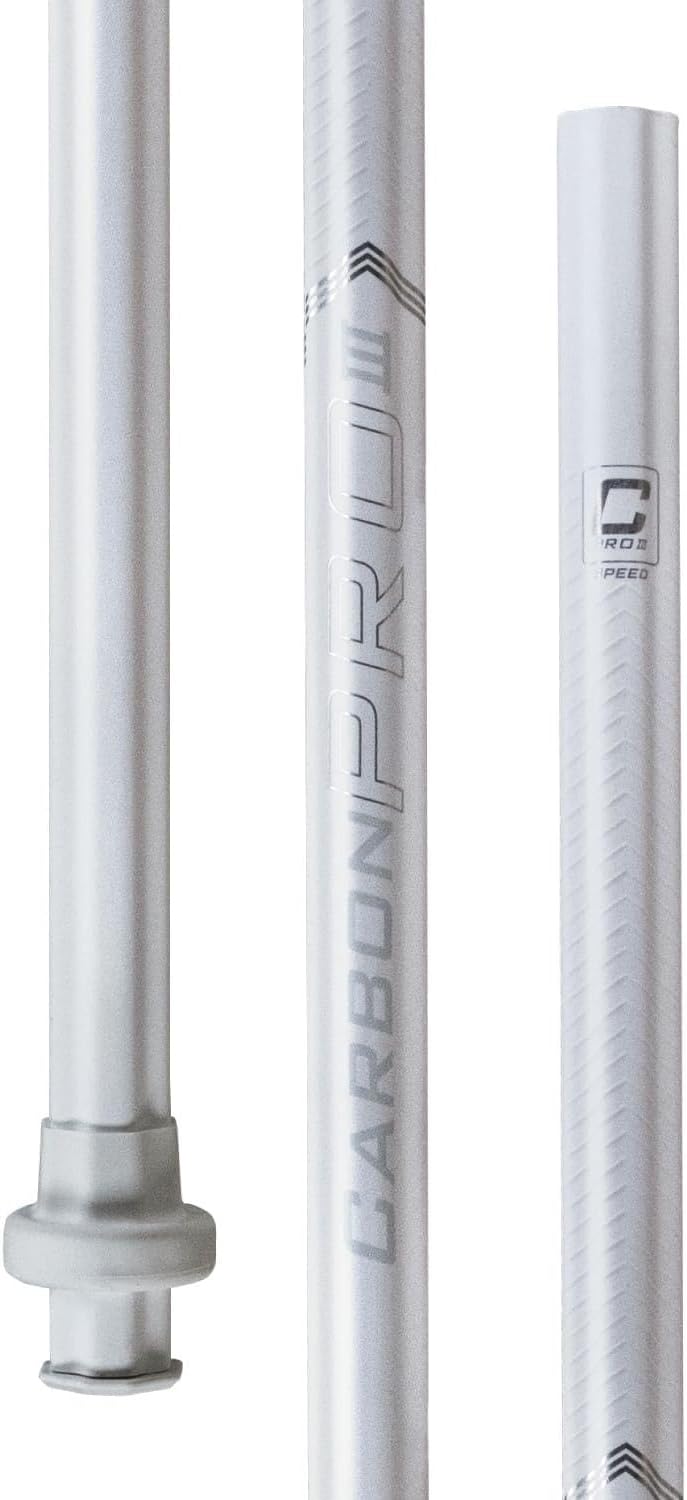
The Carbon Pro 3.0 Speed features an updated shape with increased concavity — meaning the shaft is slightly curved inward along its length. This does two things. First, it gives your hands a natural place to sit on the shaft without rotating, improving grip consistency on catches, passes, and shots. Second, the concave shape provides a tactile reference point so you always know where your hands are without looking down — something elite players do instinctively and beginners have to consciously think about.
The redesigned raised texture covers the grip zone of the shaft and provides maximum friction between your gloves and the shaft without requiring layers of tape. The texture is aggressive enough to prevent slipping in wet weather or during sweaty practice sessions while staying comfortable enough that it does not cause discomfort during extended play.
Sliding End Cap
One of the underrated features of the Carbon Pro 3.0 is the sliding end cap. Most lacrosse shafts have a fixed end cap that locks in a specific balance point. The sliding end cap on the Carbon Pro 3.0 lets you adjust where the cap sits on the butt end of the shaft — changing the balance point and feel of the stick without buying different equipment. Position it further up and the stick feels lighter at the bottom. Leave it at the end for maximum reach. Add a piece of tape to lock it in place once you find your preferred position. It is a small feature that gives you a real customization advantage.
Speed vs Power — Which Carbon Pro 3.0 Is Right For You?
The Carbon Pro 3.0 Speed is built specifically for attack players and offensive middies who prioritize a quick release. If that is your game, this is your shaft. If you are a two-way middie who wants more power on step-down shots and alley shots, the Carbon Pro 3.0 Power uses a Low Kick Point and Flex3 profile — a stiffer, more powerful feel that loads energy lower on the shaft for driving shots. The Speed is about quickness. The Power is about force. Know your game before you buy.
Who Is It For?
- An attack player who relies on quick hands and fast releases
- An offensive middie who dodges and shoots on the move
- A player who wants Kevlar durability in a premium shaft
- Someone upgrading from a standard alloy or entry-level carbon shaft
- A player who likes some flex and whip in their release
- A player who wants zero flex — try the STX Sc-Ti instead
- A power shooter who wants low kick point — try the Carbon Pro 3.0 Power
- A defender — look at the Carbon Pro 3.0 Defense version
- A beginner — more affordable shafts exist
How It Compares
| Shaft | Price | Material | Flex | Best For |
|---|---|---|---|---|
| ECD Carbon Pro 3.0 Speed | $149.99 | Carbon + Kevlar | Flex8 / High KP | Attack / Offensive midfield |
| STX Sc-Ti Attack | $149.99 | Scandium-Titanium alloy | Zero flex | Attack / All positions |
| StringKing Metal 3 Pro | $139.99 | Titanium alloy | Minimal | Attack / Midfield |
| ECD Carbon Pro 3.0 Power | $149.99 | Carbon + Kevlar | Flex3 / Low KP | Two-way midfield |
| Warrior Burn Pro Carbon | $129.99 | Carbon fiber | Medium | Attack / Midfield |
Final Verdict
The ECD Carbon Pro 3.0 Speed is one of the best attack shafts on the market right now. The combination of Kevlar reinforcement, High Kick Point, Flex8 profile, increased concavity, and redesigned raised texture creates a shaft that is faster, more controlled, and more durable than anything in the previous Carbon Pro line. For attack players who want a premium shaft with a quick, responsive feel and the durability to survive the modern game, the Carbon Pro 3.0 Speed is the answer at $149.99.